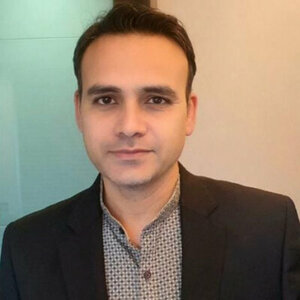
It happened near Swargate in heart of pune city, There was no warning bell, no cinematic pause. Just a sudden, brutal silence inside my chest, as if someone had reached in and switched me off. The world tilted, light fractured, and I was gone. What I did not know then was that destiny, in the shape of a cardiologist, was passing by. Dr. Madhusudan Asawa did not see a “case.” He did not see a stranger sprawled on road. He saw a human life slipping away, and that was enough. While the rest of the world hesitates,wondering who, why, how much he acted. Kneeling on unforgiving road, with no monitors, no cath lab, no sterile comfort of a hospital, he became the bridge between death and breath. His hands began CPR with the certainty of someone who has spent a lifetime listening to hearts. Each compression was not mechanical but intentional, as though he were reminding my heart of its forgotten duty. Around him, the city continued its indifference, but there, on that strip of road, time bent to his will. He did not wait for permission. He did not ask for payment. He asked my heart to beat again and refused to accept no. When my body returned, reluctantly, to the living, he did not stop. Saving a life halfway is not his language. I was shifted with urgency and precision to Poona Hospital, the siren carving a path through traffic, his focus unbroken. For him, this was not an event; it was a responsibility. Inside the hospital walls, where seconds are currencies and decisions carry the weight of forever, Dr. Asawa moved with quiet authority. An emergency angioplasty followe,not dramatic, not theatrical, but flawless. Arteries were reopened, blood reclaimed its path, and my heart, once rebellious, was brought back into disciplined rhythm. At no point did money enter the conversation. No questions of insurance, no glances at paperwork, no transactional pause between life and care. His oath was not ceremonial; it was operational. In an era where medicine often negotiates before it heals, Dr. Madhusudan Asawa healed first and never negotiated. Some doctors are skilled. Some are brilliant. A rare few are something else entirely. They become landmarks in a person’s life ,the dividing line between a “before” and an “after.” Dr. Asawa stands on that pedestal, not because he saved a heart with angioplasty, but because he recognized a collapsing stranger on a road and decided, without hesitation, that this life mattered. Today, my heart beats not just with blood, but with gratitude. Every rhythm carries his imprint. In the vast, complex world of cardiology, where technology dazzles and accolades circulate, Dr. Madhusudan Asawa’s greatest achievement was simple and profound: he stopped for a stranger, fought death with his bare hands, and asked for nothing in return. That is not just medicine. That is legacy.